How to Overcome Sales Team Pushback on New CRM AI Tools
Why do sales teams push back on new CRM AI tools? Here’s a practical guide to overcoming that pushback, based on what actually works in 2026.
Most sales leaders have seen the same pattern. A new AI feature gets added to the CRM. The demos look sharp. Leadership gets excited about the potential. Then, a few months later, only 18% of the team is actually using it. Reps were still updating deals the old way, ignoring the AI recommendations, and quietly complaining in Slack.
This is not a technology failure. It is a people problem. And it is one of the most common reasons AI projects in sales stall.
Here’s a practical guide to overcoming that pushback, based on what actually works in 2026.
Why Do Sales Teams Push Back on CRM AI Tools?
The reason that sales teams resist AI-powered CRM tools is not stubbornness. It comes from real concerns such as:
- Fear that AI will eventually replace them
- Worry that the tool is mainly for management oversight, not for helping them sell
- Distrust of the AI’s recommendations (especially when the data is messy)
- Frustration that learning a new system slows them down at first
- Loss of control over how they manage their pipeline
When leaders ignore these concerns and simply announce “we’re rolling out AI,” adoption suffers.
What the Data Shows About AI Adoption in Sales
AI use in sales is already widespread. According to Salesforce’s 2026 State of Sales research, 87% of sales organizations use some form of AI for tasks like prospecting, forecasting, or drafting outreach. AI agents are expected to cut prospect research time by about 34% and email drafting time by about 36%.
Yet individual adoption often lags behind organizational rollout. Many teams buy the tools but struggle to get consistent daily use. Gartner has noted that without strong data quality, clear workflows, and seller experience design, extra AI agents do not automatically improve productivity.
The good news: teams that treat adoption as a change process — not just a software launch — see much better results.
How To Overcome Sales Team Pushback on New AI Tools?
There are six ways that can help you reduce AI pushback by your sales team:
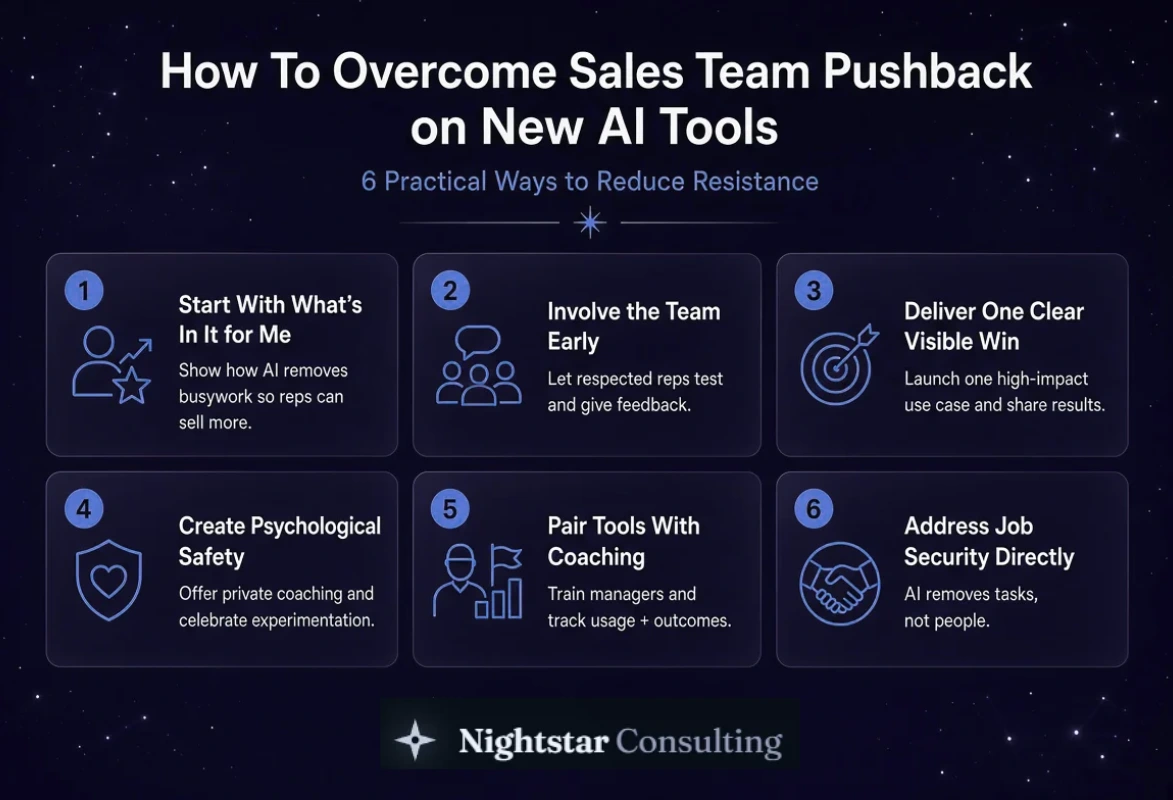
1. Start With the “What’s In It for Me”
Reps need to hear how the tool helps them, not just the company.
Instead of saying “This AI will make us more efficient,” try:
“This will handle a lot of the research and note-taking so you can spend more time on actual conversations and closing.”
Be specific. Point to the exact tasks the AI will remove (logging calls, drafting first-version emails, prioritizing leads). When people see less busywork, resistance drops.
2. Involve the Team Early
People support what they help create. Invite a small group of respected reps (including some skeptics) to test the tool during the pilot phase. Ask them what would make it useful. Let them give feedback before the full rollout.
This single step turns potential resisters into internal advocates.
3. Deliver One Clear, Visible Win First
Do not launch every AI feature at once. Pick one high-pain, high-visibility use case — for example, AI-assisted lead prioritization or automatic call summaries — and make it work extremely well for a small group.
Share the results publicly. When peers see a colleague saving 30–40 minutes a day or booking more qualified meetings, curiosity replaces suspicion.
4. Create Psychological Safety
Many reps are afraid of looking incompetent while learning the new system. Offer private coaching sessions. Make it clear that asking questions or flagging problems is encouraged. Celebrate people who experiment, even if the first attempts are imperfect.
5. Pair the Tool With Coaching and Clear Expectations
Technology alone rarely changes behavior. Front-line managers need to know how to coach around the new AI features. Update pipeline reviews so the AI insights become part of normal conversation. Track both usage and outcomes (meetings booked, conversion rates, time saved).
6. Address the Job-Security Question Directly
Avoid vague corporate language. Be honest: the goal is not fewer salespeople. The goal is higher productivity per salesperson so the team can handle more pipeline and close more revenue. Frame AI as a way to remove the work most reps dislike so they can focus on the work that still requires human judgment.
How Do High-Performing Teams Overcome AI Pushback?
The organizations that get past AI tools pushback usually follow a similar pattern:
- They treat change management as seriously as the technology itself
- They start small and expand only after proving value
- They use peer proof instead of top-down mandates
- They measure real behavior change, not just licenses purchased
- They keep improving the tool based on rep feedback
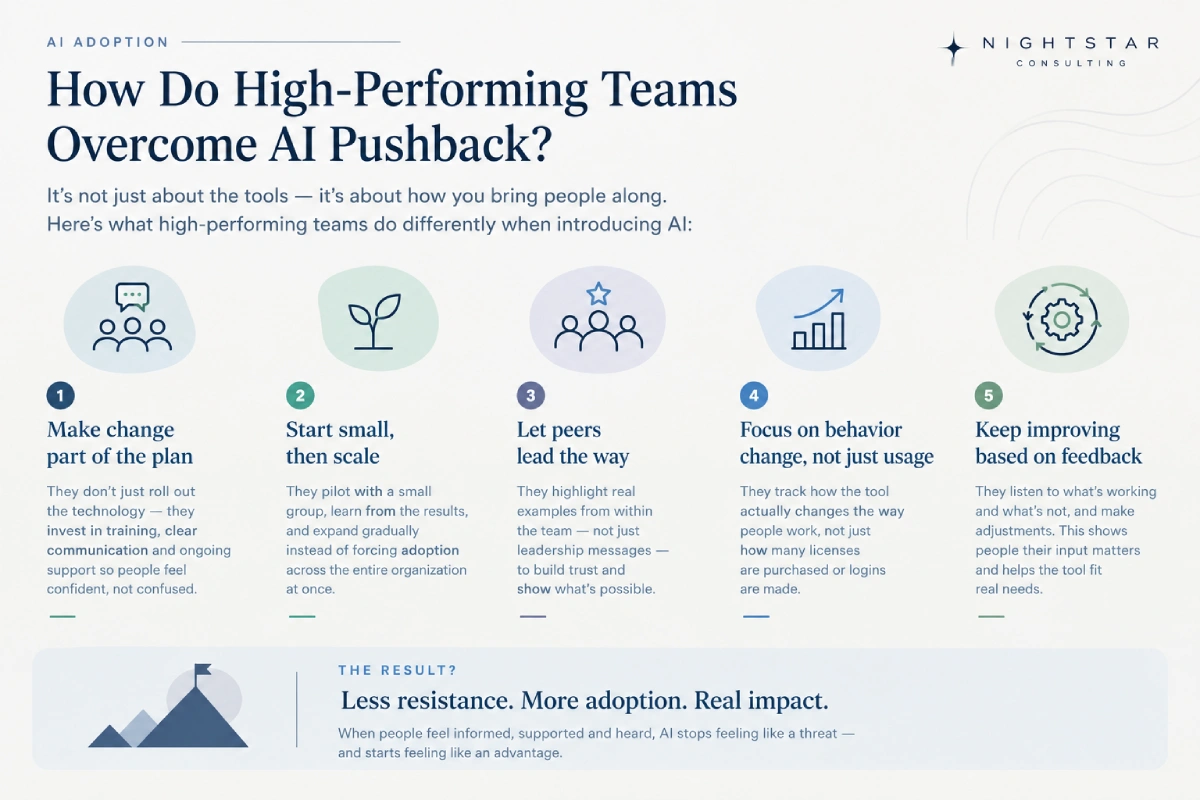
When these elements are present, resistance declines and adoption becomes sustainable.
How Can You Start Reducing AI Pushback in Your Sales Team?
If you are introducing or struggling with CRM AI tools right now, try this sequence:
- Identify the biggest daily pain point for your reps
- Choose one AI capability that clearly solves it
- Run a short pilot with a mix of supporters and skeptics
- Share real results with the wider team
- Expand only after you have visible wins and internal champions
This approach takes more intentional effort at the start, but it dramatically reduces the long-term friction that kills most AI projects.
Many sales leaders know AI can help, yet still struggle to get consistent adoption across the team. At Nightstar, we help revenue organizations design hybrid systems that combine AI speed with human judgment, so tools get used, resistance drops, and results appear in the pipeline.
FAQs
Here are some frequently asked questions about how to overcome sales team pushback on new CRM AI tools:
Why Do Sales Teams Resist New CRM AI Tools?
Common reasons include fear of job replacement, distrust of AI recommendations, concern that the tool is mainly for management oversight, and the temporary productivity dip that comes with learning something new.
How Long Does It Usually Take to Overcome Pushback?
With a structured approach that includes early involvement, quick wins, and coaching, many teams see meaningful improvement in 60–90 days. Without change management, resistance can last much longer.
Should We Force Everyone to Use the AI Features?
Forced compliance usually leads to workarounds and minimal engagement. Better results come from demonstrating clear personal benefit, involving respected peers, and making the tool genuinely helpful in daily work.
What Is the Biggest Mistake Leaders Make?
Launching too many AI features at once and focusing only on the technology instead of the people side of change. Starting with one clear use case and strong communication produces better outcomes.
How Can Managers Help Reduce Resistance?
Managers play a critical role. They should model using the tools, coach reps one-on-one, celebrate early wins, and create a safe environment for questions and feedback.